No products in the cart.
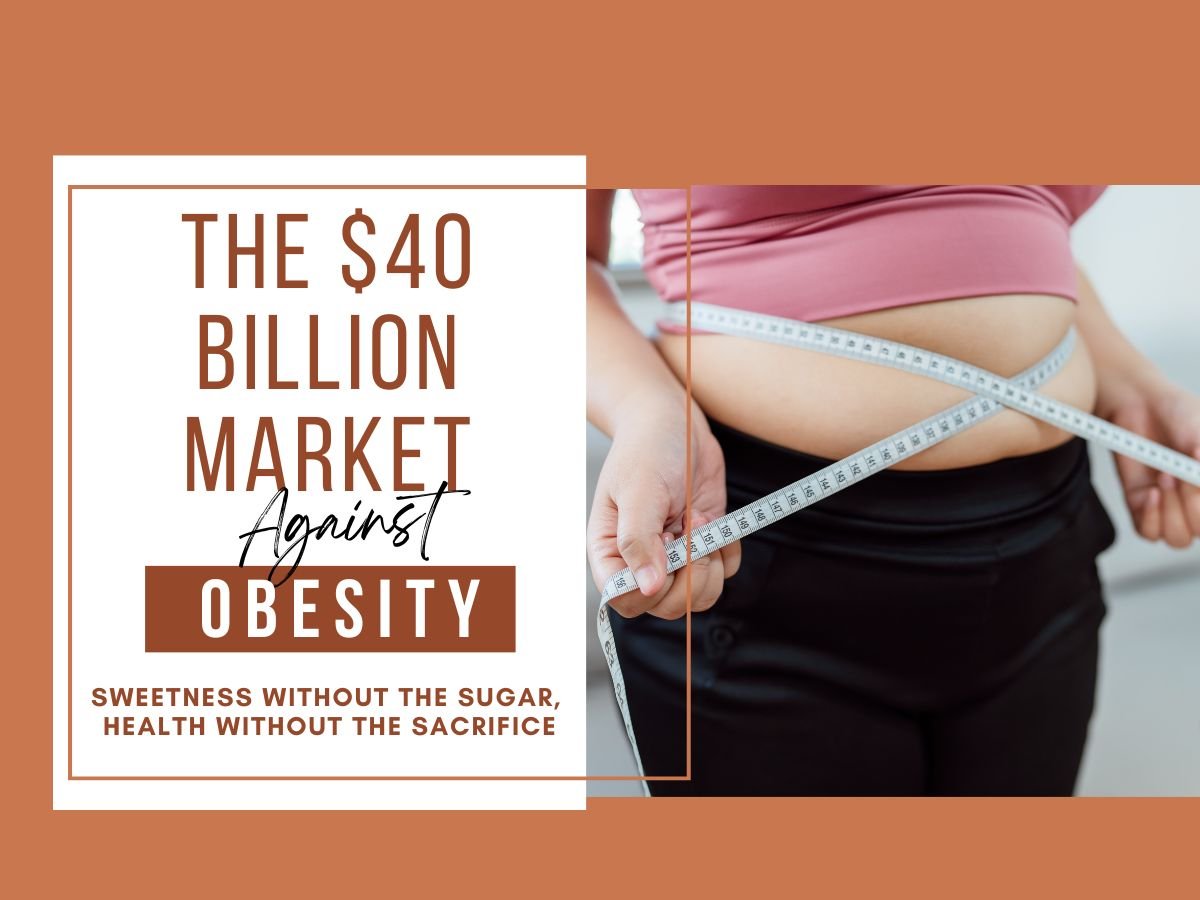
Obesity, Sugar and the Role of Quitting Sugar Without Quitting Sweetness
Tariq lost the same ten kilos three times. It was only when he understood what sugar was really doing to his body that he finally understood the opportunity in front of him too.
Tariq had tried everything. The gym memberships, the crash diets, the weekend resolutions that never survived to Wednesday. At forty-six, running a beverage-distribution business in Istanbul, he had lost the same ten kilos three separate times and gained them all back, plus interest. What frustrated him most was that he barely ate “junk.” He drank fruit juices, “healthy” energy drinks, sweetened yoghurts, the occasional soda. It felt reasonable.
Then his physician showed him a breakdown of his daily sugar intake, and Tariq went quiet. The number was enormous and almost all of it was hidden, liquid, invisible. “You don’t have a willpower problem,” the doctor told him. “You have a sugar problem. And so do most of your customers.” That last sentence lodged in Tariq’s mind. If his own product range was quietly making people heavier, then whoever could offer sweetness without the sugar was holding the future. That realisation is what set him on the road to becoming a sugar substitute supplier and eventually to India.
Why Sugar Makes Us Gain Weight
Understanding the enemy is the first step, and the science is clearer than most people realise. Consuming too much added sugar is one of the major drivers of weight gain and obesity, and it works through a few specific mechanisms.
Empty calories. Sugary foods and drinks flood the body with calories but almost no useful nutrients no protein, no fibre, no vitamins to speak of. Because these calories arrive without the signals that make us feel full, we simply consume more, and the body stores the unused energy as fat.
Insulin resistance. When the body is repeatedly hit with large sugar loads, it struggles to process glucose properly. Over time, cells respond less and less to insulin a slide toward type 2 diabetes that often begins silently, years before diagnosis.
Belly fat. High sugar intake, especially fructose, encourages the build-up of visceral fat: the deep abdominal fat that wraps around the organs and sharply raises the risk of heart disease. It is the most dangerous fat we carry, and sugar is one of its chief architects.
What makes this genuinely important and here the research is striking is that reducing sugar improves metabolic health even independent of weight loss. Landmark studies on isocaloric fructose restriction have shown that when children with metabolic problems simply swapped sugar for other carbohydrates, keeping calories identical, their blood pressure, cholesterol, and blood-sugar markers improved within days. In plain terms: sugar harms us not only because of its calories, but because of what it is. That single insight is the scientific heart of the case for natural sweeteners.
Five Reasons Quitting Sugar Not Sweetness Is a Must
- Obesity is turning manageable conditions unmanageable. Excess weight quietly pushes borderline blood pressure, blood sugar, and cholesterol over the edge into full disease.
- Diabetes follows sugar. Cutting sugar directly reduces insulin strain and type 2 diabetes risk.
- Heart disease hides in belly fat. Reducing sugar shrinks the visceral fat that endangers the heart.
- The damage is silent. Symptoms arrive late, so prevention through diet is far kinder than treatment.
- Nobody actually wants to give up sweetness. People want the pleasure without the penalty which is exactly what zero-calorie natural sweeteners deliver.
The winning idea Tariq finally grasped is deceptively simple: help people quit sugar, not sweetness. And two natural sweeteners answer that call better than any other.
Stevia and Monk Fruit: The Healthiest Answers
Stevia is the most established natural sweetener in the world. It has been used for over 1,500 years by the Guaraní people of Brazil and Paraguay to sweeten herbal teas, and the European Union approved it in November 2011. Since then it has spread across drinks, confectionery, dairy, and bakery Coca-Cola Life, made with stevia leaf extract, being the most famous launch. Stevia is prized for its zero calories and its recognised health properties: it can help lower blood glucose and blood pressure, and carries anti-inflammatory, anti-tumour, and anti-diarrheal effects. Beyond South America, it is now grown across the Philippines, Thailand, Indonesia, and Malaysia.
Monk fruit is the rising star, and the one closest to our own story. Sourced from the monk fruit plant native to China and Thailand, its headline advantage is that it is a genuinely zero-calorie sweetener with a clean, sugar-like taste and none of the aftertaste some detect elsewhere. That is precisely why PHARMET GLOBAL has placed monk fruit, alongside stevia, at the heart of our MITMITH brand for export from India. Other emerging natural sweeteners from the developing world such as the proteins brazzein and monatin are worth watching, but remain early in their commercial journey.
The major selling point that unites stevia and monk fruit is simple and powerful: zero calories, with real health and sustainability credentials. Stevia production is even believed to carry a lower environmental footprint than conventional sugar. For a monk fruit distributor or a stevia dealership, that combination of health, clean taste, and sustainability is a marketer’s dream.
A Market Riding the Wave
The numbers confirm the momentum. The global sugar-substitutes market was valued at roughly US$20 billion in 2025 and is projected toward US$40 billion by 2034, growing at about 8% a year. Monk fruit specifically is climbing at 8–9% annually. North America leads consumption commanding over 40% of the monk fruit market while Asia Pacific holds nearly 40%, powered by native cultivation and rising health awareness in China and Southeast Asia. Europe, meanwhile, is reformulating aggressively, with a majority of consumers actively cutting sugar. In short, the whole developed world is hunting for exactly what a good sweetener distributorship supplies.
Why India, and Why PHARMET GLOBAL
As Tariq searched for a reliable source, he kept arriving at India. India applies the same world-class pharmaceutical and nutraceutical manufacturing discipline that makes it the pharmacy of the world to natural sweeteners meaning certified quality at a cost no premium-country supplier can match. For an importer, that is the decisive equation: a dependable sugar substitute supplier delivering premium purity while protecting margins.
With a system-based approach, PHARMET GLOBAL transforms sourcing from India from a risk into a strategic advantage. We verify certified manufacturing, align formats to your market, own the documentation chain, and coordinate logistics so whether you launch a stevia distributorship, a stevia dealership, a monk fruit distributor line, or a full sweetener distributorship under the MITMITH banner, you build on solid ground. Because imports succeed faster when products are unique and documentation is strong.
Frequently Asked Questions
Q1. Can switching to stevia or monk fruit really help with weight?
By replacing sugar’s empty calories with zero-calorie sweetness, they remove a major driver of weight gain and visceral fat which is why demand for a reliable sugar substitute supplier keeps rising.
Q2. Why stevia and monk fruit over other sweeteners?
Both are genuinely zero-calorie with strong health credentials and clean taste the reason PHARMET GLOBAL built MITMITH around them, and why a monk fruit distributor or stevia dealership enjoys the most durable demand.
Q3. Is a sweetener distributorship actually profitable?
Yes. With the sugar-substitutes market heading toward US$40 billion, an early sweetener distributorship rides a structural, long-term health shift rather than a fad.
Q4. Why source from India?
India pairs pharma-grade, certified manufacturing with competitive pricing, making it a uniquely dependable sugar substitute supplier for MITMITH stevia and monk fruit.
Q5. What’s the difference between a stevia distributorship and a stevia dealership?
A stevia distributorship typically supplies at scale across a territory, while a stevia dealership sells more directly to end buyers; PHARMET GLOBAL supports both, plus monk fruit distributor arrangements.
Tariq’s Turn, and Yours
Tariq did more than lose the weight for good. He rebuilt his business around the very solution his doctor pointed him toward natural sweeteners that let his customers enjoy sweetness without the sugar. His stevia distributorship is now his fastest-growing, highest-margin line, and he has never felt better about what he sells.
The world is not giving up sweetness; it is giving up sugar. Stevia and monk fruit are the healthiest, most credible, and most export-ready answers and through the MITMITH brand, PHARMET GLOBAL is ready to make them your most profitable line. Whether you are exploring a stevia distributorship, a stevia dealership, a monk fruit distributor role, or a complete sweetener distributorship, the opportunity is sweet, and it is here.
PHARMET GLOBAL your dependable sugar substitute supplier for premium Stevia & Monk Fruit under the MITMITH brand, from India to the world.
Looking To Source Quality Products From India? Let’s connect.
Would you like to reach out to us for seamless Export Support For Pharmaceutical, Innovative Nutraceuticals, Cosmeceuticals, Hospital Consumables, Pet Care or any other products from India as per your requirement?
You can easily connect with us Via the following channels:
· E-MAIL: hello@pharmetglobal.com
· WhatsApp/ BOTIM: +91 9999091881
· WEBSITE: https://pharmetglobal.com
· YouTube: https://www.youtube.com/@Pharmet
· Connect With Our CEO On LINKEDIN: https://www.linkedin.com/in/arvinder270265/
Come, connect with us today & let’s deliver: Health, Happiness & Innovation together…Profitably.


Leave a Reply