No products in the cart.
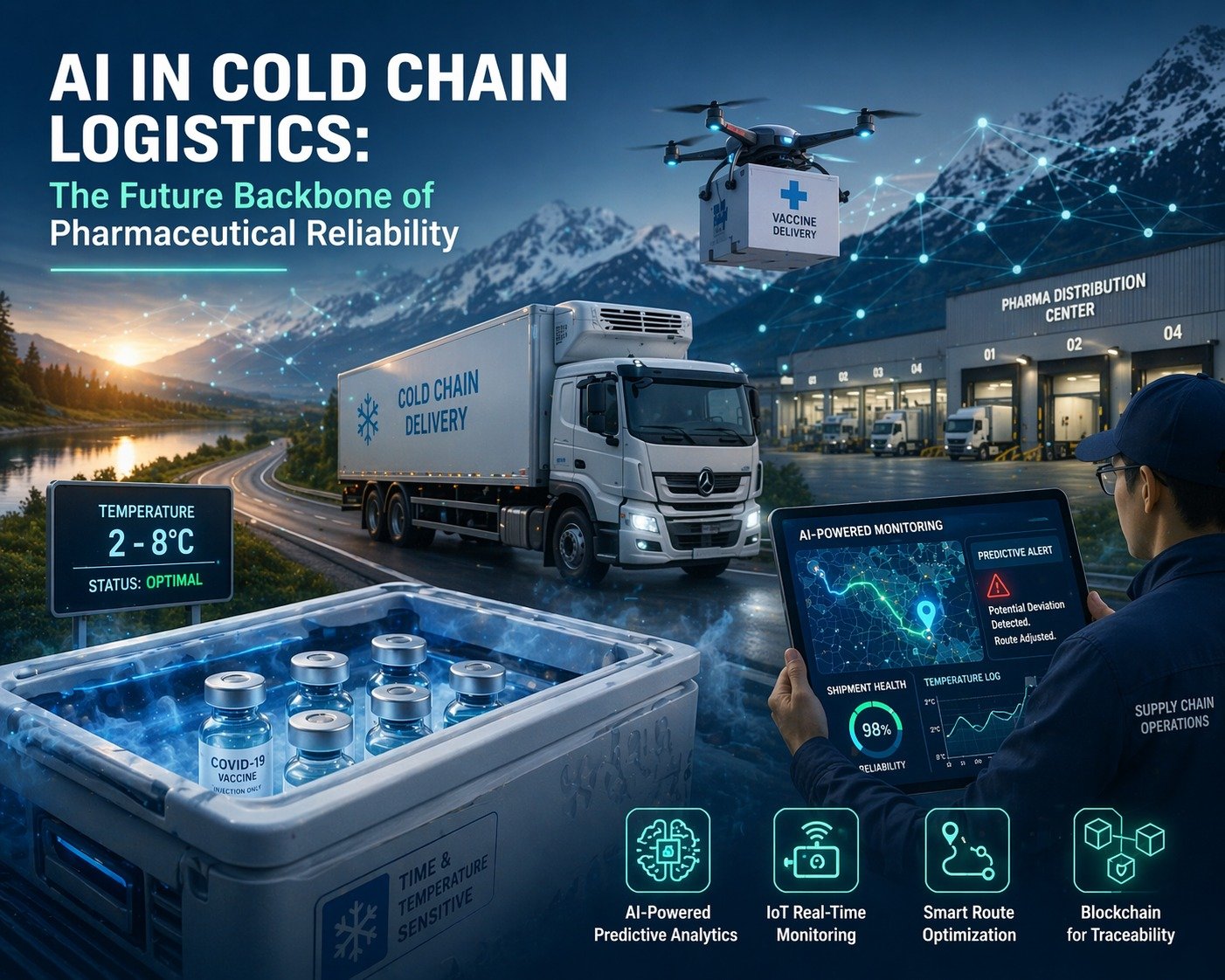
AI in Cold Chain Logistics: The Future Backbone of Pharmaceutical Reliability
Cold chain logistics ensures that temperature-sensitive medicines remain safe and effective.
Products like vaccines, biologics, insulin, and cell/gene therapies require strict temperature control often between 2°C and 8°C, or even lower.
Even a short deviation can make them unusable.
And the impact goes far beyond financial loss it directly affects patient safety, treatment outcomes, and regulatory trust.
Why Cold Chain Precision is Critical in Pharma
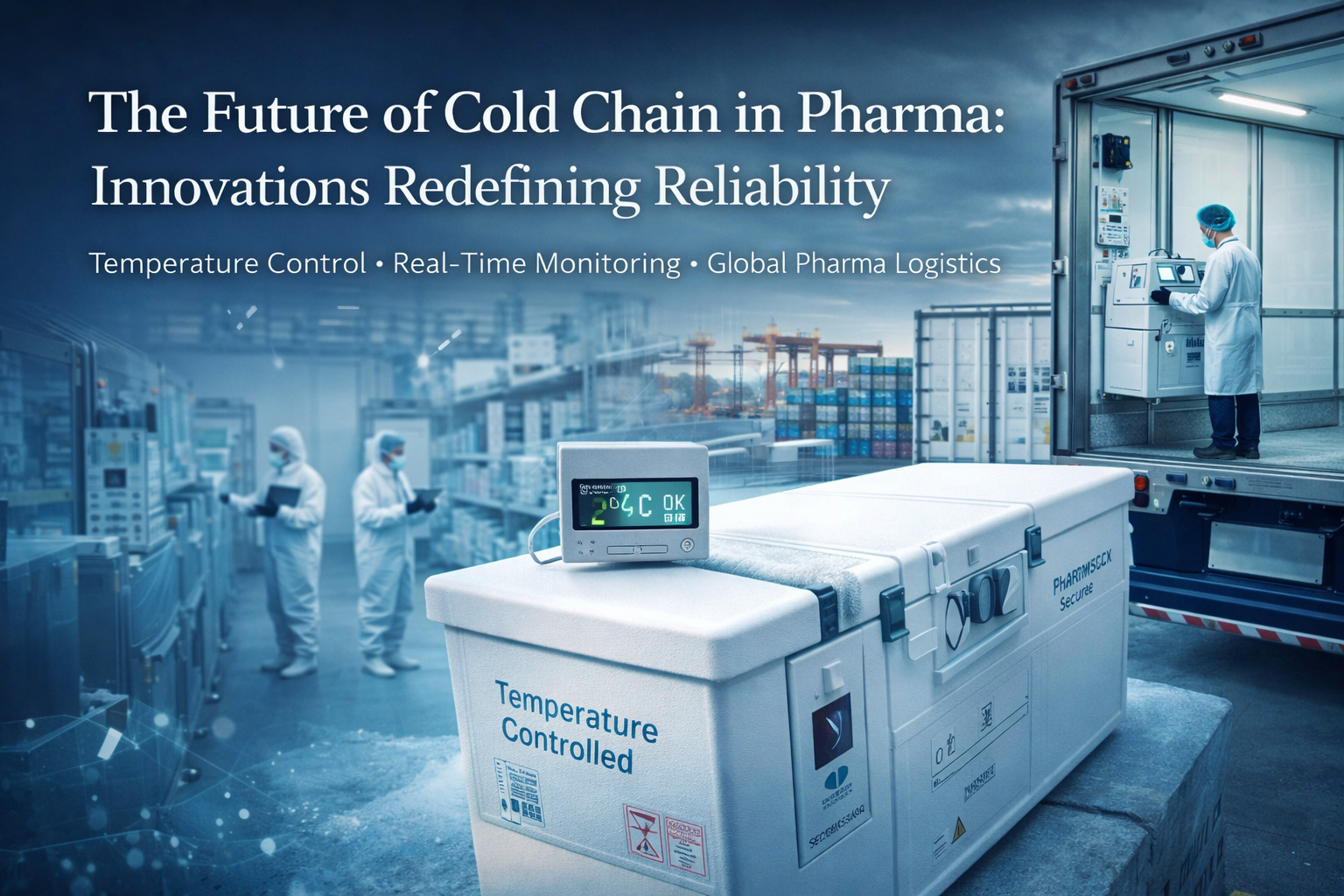
Cold chain logistics ensures the viability of temperature sensitive pharmaceuticals by maintaining controlled storage and transport environments. Vaccines, biologics, insulin formulations, and cell/gene therapies demand strict temperature adherence often between 2°C and 8°C or lower.
Any deviation, however brief, can render these products ineffective or unsafe.
The consequences go beyond financial losses they affect public health, patient outcomes, and regulatory credibility.
When Cold Chains Fail: A Costly Reality
The industry has already seen what happens when cold chain systems break down:
- In Europe, large volumes of vaccines were lost during heatwaves due to power failures
- In tropical regions, biologics were damaged because of poor container calibration and outdated tracking
These are not rare events.
They are reminders that manual monitoring and outdated systems are no longer enough.
Enter Artificial Intelligence: From Reactive to Proactive Cold Chain Management
AI is not some distant future concept it’s already improving cold chain systems today.
Instead of reacting to failures, AI helps prevent them.
By combining data, sensors, and automation, AI systems can detect risks early and act instantly.
Here’s how.
Predictive Maintenance: Preventing Failures Before They Happen
Cold storage units, refrigerated trucks, and freezers are critical assets.
If one fails, everything inside is at risk.
AI analyzes past performance, sensor data, and environmental conditions to predict equipment failure before it happens.
This allows timely maintenance and reduces unexpected breakdowns.
Route Optimization: Smarter Movement for Sensitive Shipments
Pharma shipments often pass through multiple checkpoints, climates, and delays.
AI uses real-time data like traffic, weather, and historical patterns to select the best routes.
If a disruption is expected, routes can be adjusted instantly.
The result:
- Faster delivery
- Fewer temperature fluctuations
- Lower spoilage risk
Autonomous Temperature Control & Real-Time Monitoring
With IoT sensors connected to AI systems, temperature and humidity are tracked continuously.
Unlike manual systems, AI can:
- Detect even minor deviations instantly
- Send alerts in real time
- Automatically adjust cooling conditions
This closed-loop system reduces risk and improves reliability.
Reducing Human Error: One Algorithm at a Time
Human error is one of the biggest risks in traditional cold chain systems.
Missed alerts, incorrect settings, or delayed responses can lead to major losses.
AI reduces this dependency by automating monitoring and decision-making.
It doesn’t just warn you it acts.
For an industry where mistakes are not acceptable, that’s a big shift.
Global Success Stories in AI-Powered Cold Chain
Leading companies are already using AI with strong results:
- Pfizer used AI to manage ultra-cold storage and global vaccine distribution
- UPS Healthcare tracks millions of shipments using AI systems that detect risks in real time
- Novartis reduced cold chain losses significantly using predictive analytics
These are not experiments.
They show that AI works at scale.
AI Solves the Cold Chain Puzzle on Multiple Fronts
✔️ End-to-End Visibility
AI provides real-time tracking and complete transparency across the supply chain.
✔️ Scalability
As demand for biologics grows, AI helps maintain consistency while scaling operations.
✔️ Sustainability
Optimized routes and reduced wastage help lower environmental impact.
From Guesswork to Guarantees: The Predictable Future of Pharma Logistics
Cold chain logistics is moving from reactive to predictive.
With AI, systems can:
- Detect equipment issues before failure
- Anticipate delays and adjust routes
- Maintain temperature even in changing external conditions
This is not theory.
It’s already happening.
Benefits of AI-Driven Cold Chain Logistics
- Improved Product Safety – Consistent temperature control protects drug efficacy
- Lower Costs – Reduced wastage and fewer emergency fixes
- Regulatory Confidence – Supports compliance with global standards like WHO, EU GDP, and FDA
- Stronger Trust – Builds reliability with buyers, hospitals, and partners
Conclusion: AI Is No Longer a Luxury It’s a Necessity
As pharma moves towards biologics, mRNA therapies, and precision medicine, cold chain logistics becomes even more critical.
The margin for error is shrinking.
And outdated systems simply can’t keep up.
Artificial Intelligence offers a smarter, safer, and more reliable approach.
At PHARMET GLOBAL, we see AI not as an upgrade but as a foundation for modern pharmaceutical logistics.
Because in pharma, predictable systems lead to predictable outcomes and that ultimately means better patient care.
STAY HEALTHY. STAY BLESSED!
Leave a Reply